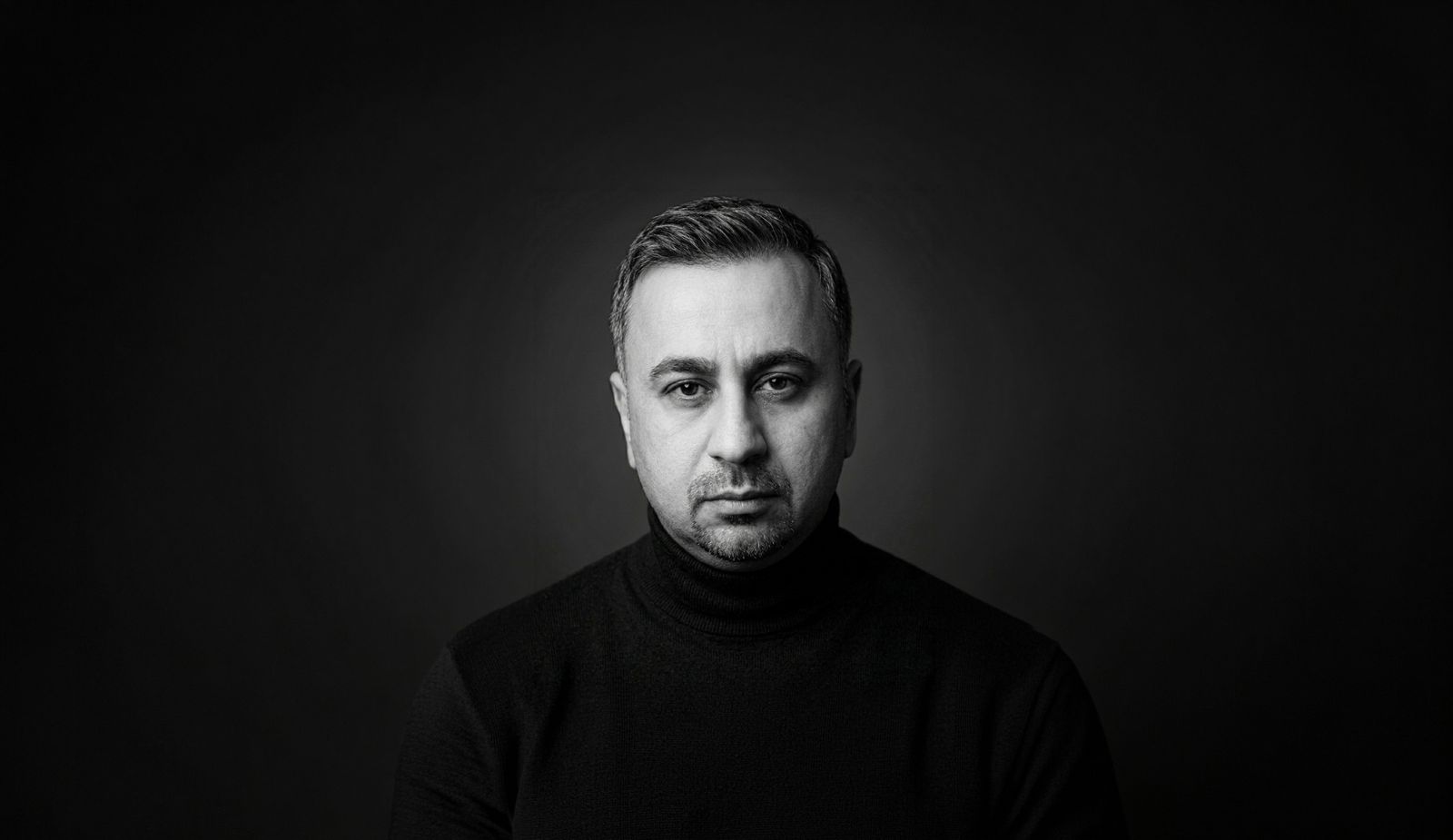
- Could you briefly introduce yourself and tell us about your current role at Ajman University?
Meet Firas Salim Noori, an architect, academic, and author with over two decades of professional experience bridging the gap between architectural practice and education. He holds a Master of Design (M.Des.) in Sustainable Design from the University of Sydney, Australia, and a Master of Science (M.Sc.) in Architectural Engineering from the University of Technology in Iraq.
Currently, Firas is working as a Senior Lecturer in the Department of Architecture at Ajman University in the United Arab Emirates. Mr. Noori has dedicated his academic career to educating the next generation of architects in cutting-edge digital methodologies. He has an extensive teaching portfolio, covering core architectural design studios alongside highly specialized courses in Parametric Architecture, Computational Design, Generative Design, and Building Information Modelling.
- Could you talk about your cooperation and engagement with Autodesk?
As an internationally recognized expert in building information modelling (BIM) and algorithmic design, Noori holds the prestigious title of Autodesk Expert Elite and is a Certified Professional in Autodesk Revit Architecture since 2013. His technical mastery is evident in his widely acclaimed textbooks, for example, Revit Parametric Design: Revit Families for Beginners, which serve as a foundational resource for students and professionals seeking to master parametric modelling within the Autodesk Revit environment.
- What is the main platform you use to share knowledge?
Beyond his academic and literary contributions, he is a prominent educational influencer; his dedicated YouTube channel “Firas Noori”, which focuses on AutoCAD, Revit, Autodesk Dynamo, and Computational/Generative Design, has garnered a substantial following of over 13,000 subscribers, making complex parametric concepts accessible to a global audience.

“Firas Noori” YouTube Channel
- What first inspired you to pursue architecture, and how did that path eventually lead you into teaching?
My journey into architecture began with a deep fascination for the relationship between space, structure, and human experience — a passion that led me to pursue my Bachelor of Science in Architectural Engineering. From the very beginning, I was drawn not only to the art of designing buildings, but also to understanding the technical and environmental forces that shape them. That dual curiosity — creative and analytical — became the defining thread of my entire career. Being able to understand design, the aesthetic, and logic behind it; In order to be able to teach it, this was the challenge that I always wanted to tackle.
- What encourage you to enter the world of computational and generative design?
To meet the demands of today’s rapidly evolving design environment—where higher quality outputs are expected at greater speed and within increasingly constrained timeframes—I began to recognise the urgent need for alternative design methodologies. Traditional approaches alone were no longer sufficient to address the complexity and pace of contemporary practice. This realisation led me toward computational and generative design, which empower architects with the ability to generate multiple design options within a significantly reduced timeframe, explore complex geometries, and produce comprehensive documentation for each proposal.
In this context, I found in Autodesk Revit and Autodesk Dynamo capabilities that I had not encountered in other digital design platforms. Together, they form an integrated workflow that bridges computational exploration and practical implementation. Dynamo facilitates the generation and control of complex morphologies, while Revit enables the efficient transformation of these explorations into detailed, buildable project documentation.

Computational/Generative Tower Design Allows Complex and Multiple Design Proposals (Architecture Design V Student Work at Ajman University Supervised by Firas Noori)
- You hold both an M.Sc. in Architecture Engineering and a Master in Sustainable Design from the University of Sydney. How have these two academic experiences shaped your current professional perspective?
The turning point, I believe, was my Master of Design in Sustainable Design at the University of Sydney. Studying sustainability at that level forces you to confront a fundamental question: how do you design buildings that are not only beautiful and functional, but also genuinely responsive to their environment — to climate, to energy, to the way people live in them? Answering that question manually, through intuition alone, has its limits. I began to realise that computational tools offered something far more powerful — the ability to simulate, iterate, and optimise design decisions in ways that the human mind simply cannot do alone.
- The new passion of high-rise building design
A long-standing childhood fascination—shaped by imaginative games and science fiction films—has continuously fuelled a desire to design futuristic high-rise buildings that reach toward the sky through bold and expressive geometries. This early inspiration has evolved into a more grounded yet equally ambitious passion in adulthood. Living in the United Arab Emirates for over a decade has provided a rich and dynamic context, where iconic skylines and rapid urban development serve as a constant source of inspiration for high-rise design.
This passion is also reflected in my academic role at Ajman University, where many of the topics I teach are thoughtfully adapted to align with this vision. Through this approach, I aim to inspire students to explore innovative tower design concepts that embody both aesthetic elegance and structural expression, ultimately merging creativity with advanced computational and architectural thinking.

Futuristic Tower Design Proposed at Ajman – UAE
(Part of Architecture Design V Student Work at Ajman University)
- As a Senior Lecturer, what do you find most rewarding about teaching the next generation of architects and designers?
Without hesitation, the most rewarding moment is when a student has that breakthrough — when something that seemed abstract or intimidating suddenly clicks, and you can see it in their work and in their eyes. Whether it is a student who finally understands how a parametric family behaves in Revit, or one who produces their first computational design output in Dynamo, that moment of realisation is something no other professional experience can replicate. It reminds you why you chose to teach in the first place.

Teaching a group of students at Ajman University
- As an author, what do you focus on in your publications?
I have two type of publications academic research paper publications which have been published in different journal around the world, and the other type concerns about digital design. I have three main books:
- Revit Parametric Design: Revit Families for Beginners. 2021
- Dynamo – Grasshopper Dictionary: Guidelines for Beginners. 2023
- Computational Tower Design with Autodesk Dynamo: Guidelines for Beginners. 2025
- How do Autodesk tools support your teaching, design exploration, or research workflow?
Autodesk tools are not just software I use — they are the backbone of almost everything I do, whether I am standing in front of a classroom, exploring a design idea, or conducting research. My relationship with Autodesk goes back many years, and it has deepened considerably over time. This relationship empowered me with the best I need to achieve successfully any target and I am sure it will continue this trend with all.
- What does being an Autodesk Expert Elite mean to you personally?

Before that, earning the Autodesk Revit Certified Professional credential in 2013 was an important milestone, as it introduced me to a major accreditation landscape that enhanced my career. But what truly defined my commitment to the Autodesk ecosystem was being recognised as an Autodesk Expert Elite — a distinction that reflects not only technical proficiency, but a genuine dedication to sharing knowledge and contributing to the broader community of Autodesk users worldwide. Being a co-founder of the Autodesk Expert Elite Arabia community in 2021 further cemented that role, as it gave me a platform to bring these tools closer to Arabic-speaking architects and designers across the region. As an Autodesk Expert, I am always passionate about sharing knowledge, answering questions from students and professionals alike, guiding any learning process required within the community, and explaining Autodesk knowledge to all who need it.