Note: This article was originally published in English HERE.
To begin, could you introduce yourself and tell us a bit about your background as a 3D designer?
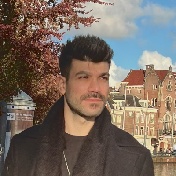
My name is Kaan Zorlu, and I am a 3D Generalist and Stylized Character Artist based in Los Angeles, California. I specialize in the full character creation pipeline, from sculpting and modeling to XGen grooming, rigging, and rendering.
I come from an Architecture background (Beykent University), which gave me a strong foundation in structure, proportion, and form. However, my true passion has always been creating expressive characters. Today, my focus is on bridging the gap between artistic appeal and technical production workflows, using tools like Autodesk Maya and Arnold to bring high-quality stylized characters to life.

How did you first get into 3D modeling and character creation?
I started surprisingly early—when I was just ten years old. I fell in love with the 3D world after watching animated films. At that time, learning resources were extremely limited; there were no YouTube tutorials. I learned almost entirely by exploring Maya’s internal help documentation, trying to understand what each tool actually did.
I began with hard-surface modeling, creating complex objects to understand topology. Once I became comfortable, I transitioned into character modeling, heavily inspired by Disney and Pixar. Interestingly, before diving into sculpting or grooming, I went deep into rigging. Understanding how a character moves fundamentally changed how I model characters. That journey—from modeling to rigging, and eventually sculpting and grooming—is what shaped me into the Generalist I am today.

Can you explain the story behind the character?
The artwork is titled "Love Potion."
It features a blonde witch inside a magical classroom, captured mid-action as she casts a spell to summon a potion bottle from a bubbling cauldron. Instead of a dark and moody atmosphere, I wanted to interpret it as something vibrant, playful, feminine, and pink-dominant. The piece captures a frozen moment of magic, curiosity, and a bit of mischief.
What sparked the initial inspiration for this design?
I wanted to challenge myself by creating a full narrative scene without relying on a 2D concept. Most of the time, we translate 2D illustrations into 3D. For this project, I designed everything directly inside the 3D viewport.
The goal was to see if I could manage every aspect of a complex project—character, environment, layered clothing, magical props, and architectural elements—while still maintaining a cohesive, stylized color palette and strong visual storytelling.

Which software did you use, and why?
Autodesk Maya was the central hub of my workflow. I used it for retopology, UV mapping, scene assembly, rigging, and final rendering with Arnold.
For the additional stages of production, I relied on ZBrush for organic sculpting, Marvelous Designer to establish the base cloth simulations, XGen for all hair and grooming work, and Substance Painter for texturing. This software stack gives me the perfect balance between artistic freedom and technical control, especially when managing large, complex scenes.
What were the main stages of your workflow?
Because there was no 2D concept, I began with a rough 3D blockout in Maya, focusing on composition and camera placement. Once the silhouette was locked, I moved into ZBrush for sculpting.
The full workflow moved organically from sculpting in ZBrush to retopology and UV layout in Maya. From there, I focused on texturing in Substance Painter, followed by grooming with XGen and rigging the character to achieve a dynamic, believable pose. The final stages were dedicated to look development and rendering in Arnold.
Did you create a rig for the character?
Yes, the character is fully rigged. With my background in rigging, I find it difficult to pose characters by simply moving vertices. A proper rig allowed me to explore weight, balance, spine curvature, and cloth flow naturally. It also enabled faster iteration and more believable posing.
How did you approach UVs, texturing, and shading?
Shading was a major challenge due to the pink-heavy color palette. The key was creating material separation so the scene wouldn’t feel flat.
Using complex Arnold shading networks, I carefully differentiated between the glass of the potion bottles, the liquid materials inside them, and the fabric shaders of the witch’s dress. Even though many elements shared similar hues, they reacted differently to light, which helped maintain visual depth.

What was the most technically challenging aspect of the project?
The biggest challenge was hardware limitation. Love Potion is a massive scene with millions of polygons, dense XGen hair, and complex refraction shaders—all rendered on my personal PC.
Crashes and memory limits forced me to learn scene optimization, especially with XGen modifiers. This project taught me that being a Senior Artist isn’t just about visual quality—it’s also about creating scenes that are efficient and renderable.
What does this character represent for you as an artist?
This piece represents my transition from being a Character Modeler to becoming a true 3D Generalist. It was the first time I successfully executed a full environment, complex character, and storytelling moment entirely on my own—from concept to final render.
What did you learn creatively while working on it?
I learned to trust Arnold CPU rendering. While GPU rendering is popular for speed, I found that for this stylized look, the CPU produced cleaner results—especially in subsurface scattering. It reinforced the idea that patience often leads to better quality.
What would you like to explore next?
I want to push stylization even further. While the proportions are stylized, the rendering still leans toward realism. In future projects, I want to break PBR rules and explore a more painterly, illustrative 3D look directly in the render.
What advice would you give to aspiring 3D character artists?
Focus on the fundamentals, not just the tools. Software changes every year, but anatomy, color theory, composition, and gesture remain constant.
If you train your eye to understand form and light, you can create art with any software. Learn to be an artist first and a technician second.
You are an Autodesk M&E Community friend, but where else can we follow your work?
You can explore my portfolio and professional work on my personal website, where I showcase finished projects and ongoing explorations. My latest character work is available on ArtStation, and I regularly share insights about the 3D industry and senior artist mindsets on LinkedIn.
- Website: https://www.kaanzorlu.com/
- ArtStation: https://www.artstation.com/zorlukn13
- LinkedIn: https://www.linkedin.com/in/zorlukn13/
You must be a registered user to add a comment. If you've already registered, sign in. Otherwise, register and sign in.