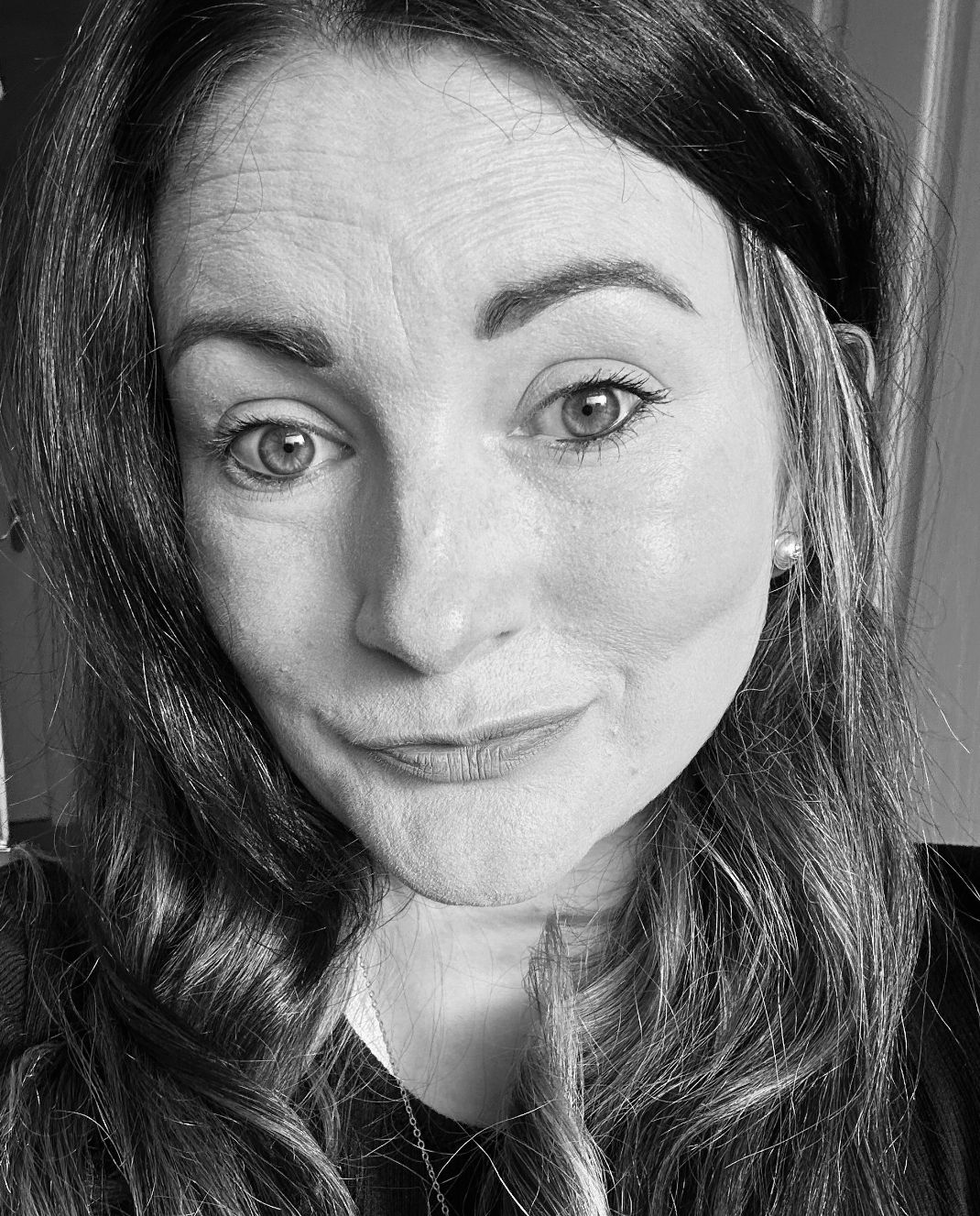
For today's Autodesk Community Spotlight, we're excited to share a conversation with UK-based 3D artist and educator Holly Watt! In addition to her years of work as a 3D Generalist in the media & entertainment industry, Watt is an excellent educator who currently reaches thousands of users worldwide through her YouTube channel, "Holly's Maya Tutorials." She also recently started the PolyRocket Discord community as a space for fellow artists to network and support one another. Check it all out below.
Hi, I'm Holly, a Senior 3D Artist and Educator from the UK. I've been working in 3D for over 10 years, mainly across VFX, and teaching part-time in universities for 6 years until February of this year. I work as a 3D Generalist, so I don't really have a specialism, but if I had to pick my favourite part of the pipeline, it would be modelling by far.
Please tell us a little bit about your experience in the 3D industry and how it compares to your educational work.
I started out working as a Junior 3D Artist at a small boutique VFX studio in London where the Lead 3D Artist and I were the only people on the 3D team, so I very quickly ended up going down the route of being a Generalist and not being afraid to learn new techniques which were often required. This gave me a solid foundation, and I then went freelance and continued to work as a 3D Generalist with some amazing clients I've had for nearly 10 years. I've worked across Film and TV and, more recently, a focus on advertising and produce rendering, too.
My educational work has always been part-time alongside my industry work, as I believe it's important that what I teach is based on real industry experience. Even though I'm teaching new artists the foundations of 3D, teaching still pushes me to expand my skill set, as I have to think of new approaches to solving students' project ideas.
Congrats on reaching 4k subscribers on your YouTube channel! What motivates you to create these high-quality animation tutorials on Maya, Arnold, etc?
Thank you! I'm really hoping to hit 5k soon! I love 3D and Maya, so I am passionate about sharing my knowledge. I started my tutorials whilst teaching 3D at the university level because I had some great tips on common issues students face. Having taught multiple cohorts, I was always adapting my teaching methods to try and explain the more complex aspects better, so I thought it would be great to share with others who may also struggle to learn them. Once I started sharing, I would receive wonderful comments saying how much I'd helped them and it's just continued to motivate me. I just got monetized on YouTube, so that's another little incentive there, but definitely not the main one.
You're very responsive to your community online. Why is staying connected to an online community important to you?
I love connecting with other artists who are as passionate about 3D as I am, so it feels amazing to talk so much about a shared interest! My reel that went slightly viral has over 1,500 comments, and getting to respond to that many people who are also interested in 3D was pretty huge.
My friend @Vectron3D and I recently set up a Discord called PolyRocket, where we are helping artists connect, network, and support each other with help and feedback. Networking is also essential to working in the industry, as many of my clients or jobs I've worked on have been acquired through word of mouth. So, if I am the first person someone's networked with, then I'm happy to be responsive and hope they continue to reach out to other artists to build their own small communities, too.
How do you decide on a new topic to create?
While teaching at Universities, finding new topics was easy because I often saw my students making the same mistakes or encountering the same issues. So, I would use that as inspiration to create my tutorials. Now, I have a bit more freedom to create any tutorial topic. I usually take my personal projects and turn some of the techniques I used in those into tutorials, or I take some requests from people if they leave comments on my videos.
What is most important to you when you create educational content?
I am very particular when creating content; I would never teach a quick fix to skirt around a complex subject. I just make sure that my tutorials are as concise as possible without leaving any information out. If they need to be six parts long because 3D can be so complex, then they will be six parts long. I do like to make some short quick tips under 60 seconds, though, to balance it out. Everything I teach is a technique or tool that I use in my industry work.
Do you currently leverage any AI tools in your workflows? If not, what are your general thoughts on AI in design & make workflows?
I don't use any AI tools as a 3D artist. I'm very wary of AI, and maybe it's also because I'm quite old school, and I learnt to create everything from scratch, so I tend not to think about using AI to replace my skills. As a content creator, I occasionally use AI suggestions for better video titles and auto caption generation. AI is obviously here and being developed at a rapid pace, but I don't currently see it as a way to replace my skills until I know it can do something for me with minimal input on an area of the pipeline that isn't creative, like UVing.
Do you have any advice you'd like to share with other 3D creators who are perhaps just beginning their education or careers?
Try to build a network to connect with other artists first and foremost; creating 3D art is complex, and the industry is also a complex one to navigate, so having a supportive network is essential. Otherwise, it would be to keep learning new things. With every new personal project you start, try incorporating a new technique or pushing a different technique further to grow your skills. Even if it's just a small step to improve each project, you will soon notice the difference.
---

You must be a registered user to add a comment. If you've already registered, sign in. Otherwise, register and sign in.