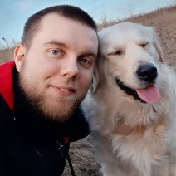
1. You’ve been working as a Senior Groom Artist since 2016 and in 3D since 2009. How did you get started in grooming and look development?
Yes, I started doing grooming for clients in 2016. It’s actually quite an interesting story.
At that time I was recording a lot of different 3D tutorials for my YouTube channel, and subscribers often asked questions about various topics. One day a subscriber asked about creating a hedgehog. She provided a simple model and asked if I could explain how to make the fur, the spikes, and the whiskers using her example.
Back then I didn’t really know how to do any of that. The only thing I had experience with was creating hair using ZBrush Fibermesh. But the question made me curious, so I started researching what tools were available for this in 3ds Max.
So initially I showed her how to do it in ZBrush:

Later on I discovered Ornatrix and recorded another tutorial:
After about a week of learning it, I became really fascinated with hair creation and decided to try making my first hairstyle.

I wrote about it in Autodesk blog recently
That’s basically how I got into 3D grooming.
As for look development, I had been working with it since around 2009 for different kinds of projects. I always wanted to create beautiful, high-quality images, and that was something we were taught at the “IT STEP” Computer Academy in Donetsk. We studied many different aspects of 3D, and that’s how my graduation project turned out.


More renders here
After finishing my studies, I immediately started working in an office where we were creating hidden object games for iPad and PC. My job involved building different environments with various lighting setups using V-Ray, Mental Ray, Scanline, and other renderers available at the time, so that 2D artists could paint over them. There are many examples of that work here


A lot more renders here
So by the time I moved into 3D grooming, I already had quite a lot of experience in different areas of 3D, including look development.
2. You have experience across games, TV, cinematics, and advertising. How does your approach change depending on the medium?
Yes, I’ve worked on many interesting projects across different areas.
The core principles stay the same, but the priorities change a lot depending on the medium.
In film and high-end cinematics, the focus is usually on visual fidelity. You have more freedom with strand count, simulation complexity, and shading models. The goal is to achieve believable detail even in extreme close-ups. In this case I often spend more time on micro variation, breakup, and subtle irregularities that make the groom feel natural.
In games and real-time engines the main challenge is performance. You still want the groom to look realistic, but you have to think about budgets from the very beginning. That means working with hair cards, optimized strand counts, efficient shaders, and LOD systems. A lot of the work becomes a balance between visual quality and rendering cost.
Advertising projects often sit somewhere in between. They may require film-quality visuals, but usually with much tighter production schedules. In those cases the workflow becomes more about finding efficient solutions and reusing well-tested techniques from previous projects.

So the artistic goal stays similar, but the technical decisions change depending on where the asset will be rendered and how it will be used in production.
The interesting part is that I personally never had extremely tight deadlines. In many projects I was given a lot of creative freedom. Often the optimization work was handled by technical artists, which allowed me to focus primarily on the artistic side. The main task was simply: make it look great, and then we’ll figure out how to optimize it.
3. What motivated you to focus exclusively on one project at a time, and how has that shaped your workflow?
To be honest, this approach developed gradually through practice. When you work with hair and fur at a high level, these tasks require very deep focus. Grooming is rarely a simple task - there are always many nuances: shape, silhouette, hair behavior, shading, interaction with light, and also the technical limitations of the pipeline.
When I previously tried to handle several projects in parallel, I noticed that I was losing a lot of concentration. Each project has its own style, technical requirements, tools, and constraints. Constantly switching between them reduces the quality of decisions and slows the work down.
So over time I started consciously taking one main project and fully immersing myself in it. This approach allows me to find solutions faster, develop details more deeply, and keep the entire pipeline in mind - from grooming to final shading and integration into the engine or renderer.
It significantly changed my workflow. I began structuring the work in a more iterative way: first quick technical tests, then a grooming prototype, and after that gradual detailing and optimization. When your focus is not scattered across multiple tasks, it becomes much easier to maintain both artistic consistency and technical stability.

In the end, this approach turned out to be not only more comfortable for me, but also much better for the quality of the final asset.
That’s why even when strong studios approached me, if their internal process was chaotic - very tight deadlines and constant switching between projects - I usually chose not to take those jobs. I prefer a structured approach to work. First you complete one task properly, and only then move on to the next.
4.Tell us more about the piece from Love, Death + Robots. Regarding the Cat Sanches asset, what was your biggest technical or artistic challenge in grooming and look-dev?
First of all, almost every project for me is a new challenge. Even with a lot of experience, clients often come with tasks that require finding new solutions. But over time you develop an understanding of how to approach a problem and where to start in order to quickly find a workable direction.
The situation with Cat Sanches from Love, Death + Robots was quite similar. I hadn’t created this exact type of cat before, but I already had a solid understanding of how fur works and how to analyze references. So the first step was to study the fur structure, the silhouette, and the distinctive features of that specific character.
At that time we didn’t even have the final cat model. I was given a rough sketch that was actually a bit thinner than the final character. The idea was not to remodel the character and spend time on that, but instead to achieve the correct look using the fur itself.
One of the main artistic challenges was achieving a convincing fur structure. Cats have a very complex layering system: dense underfur, longer guard hairs, and different densities and lengths of fur across various parts of the body. All of this needed to be represented in a way that looked natural while still preserving a clear and readable silhouette.
At the same time, we didn’t have much time for R&D, and a fully final result wasn’t required from me. I spent most of the time working on the face and the front part of the character. The rest remained more at a sketch stage, but even so the client liked the direction and the asset was later passed to other groomers for further refinement.
From a technical perspective, one of the main challenges was balancing fur density, shading, and rendering stability. When working with dense fur it’s easy to run into noise, lighting issues, or loss of shape. Because of that, a large part of the work involved look development - testing density, hair thickness, color variation, and small random deviations that make the fur feel more natural.
All of this had to be done directly in Unreal Engine rather than in offline renderers, which added its own set of challenges. The goal was to achieve good visual quality while keeping the performance reasonable so the scene could still be rendered smoothly.
It was also very important to control the large shapes. Even with high detail, the fur still needs to support the character’s silhouette and read clearly in the frame.
In the end, the main challenge was finding the balance between artistic expression and technical stability: making the fur detailed and lively, while keeping the render clean and the pipeline manageable. I spent quite a lot of time experimenting with different CVars, testing variations in fur density, shading setups, and overall configuration to make everything work properly.
5. How do you balance realism, artistic vision, and performance in real-time engines?
Balancing realism, artistic style, and performance is one of the key challenges when working with hair in real-time engines. In practice, it is always a compromise.
The first step is to understand the artistic goal. It’s important to determine what level of realism is actually needed for the project. Sometimes a convincing visual impression is enough, rather than physically accurate reproduction of every strand. This helps establish the correct level of detail from the very beginning.
The second aspect is technical limitations. In games and real-time projects there are always budgets: polygon counts, texture usage, and shader instructions. Because of that, I try to build the groom from the start with these constraints in mind. For example, using hair cards, optimized textures, LOD systems, and shaders that provide a strong visual result without a high rendering cost.
The third factor is silhouette and readability. In real-time environments it is more important that the character reads clearly from a distance and during movement. Sometimes a few well-placed hair cards produce a better result than a large amount of small detail.
It’s also important to consider the hardware capabilities available during development. When I was working on this project, I had an RTX 3080 GPU, and even that was sometimes not quite enough for certain experiments. Because of that I had to carefully search for the balance between quality and optimization, run many tests, and occasionally accept compromises.
At the same time, it’s important to remember that this was an R&D concept. We were not aiming to achieve a perfectly polished offline render like in a full film production. The goal was more exploratory - to understand how far real-time quality could be pushed.
In the end, we were all satisfied with the result. Moreover, the concept itself unexpectedly received a very strong response from the professional community. A LinkedIn post about this R&D gained significantly more views, likes, and reposts than my previous publications, which was a pleasant confirmation for me that these kinds of explorations are genuinely interesting to people.

6. Were there any moments in the R&D process that forced you to rethink your pipeline or techniques?
Yes, situations like that happen quite often during R&D. Research work is exactly about the fact that initial ideas don’t always work the way you expect.
During testing I ran into several cases where the chosen approach looked good at an early stage but started causing problems as the groom became more complex. For example, the hair density increased, lighting conditions changed, additional layers were added, and it became clear that the original setup was no longer producing a stable result.
At that point you sometimes have to reconsider not only individual settings but the entire grooming approach. This can involve the structure of guide hairs, density distribution, cluster organization, or even how the modifier stack itself is built.
The good thing about R&D is that it allows a lot of freedom to experiment. Sometimes the solution turns out to be simpler than expected. For instance, instead of adding more and more hair layers, it can be more effective to rebuild the base groom structure and reconstruct the overall form.
Over time you begin to realize that pipeline flexibility is more important than having a seemingly perfect solution from the start. Because of that, I try to build grooms in a way that allows them to be easily restructured at different stages of the process. This helps a lot when new requirements appear or when unexpected technical limitations come up during production.
7. How do you approach building early prototypes and testing hair/shading pipelines efficiently? What is your workflow using Autodesk software?
I usually start with a very simple prototype. At an early stage it’s important not to try to create the final groom immediately, but to test the core principles: shape, hair direction, base density, and how the shading behaves under different lighting conditions. This approach helps quickly determine whether the chosen solution is working.
The first step is analyzing references and breaking the groom into larger zones. I try to identify the main hair growth directions, key shapes, and the overall silhouette. After that I create the base groom structure with a minimal number of guide hairs to establish the form.
Then comes the stage of quick tests. I experiment with several variations of density, hair thickness, length variation, and small random deviations. It’s very important to check the result under different lighting conditions, because hair reacts strongly to light and shading.
In Autodesk Maya with Ornatrix, my workflow is usually iterative. First a base groom is created using guide hairs, and then modifiers are gradually added to shape the form and add detail. I try to keep the modifier stack relatively simple so the groom remains manageable and easy to adjust at different stages.
At the same time I test the shading. Small changes in hair thickness, color variation, or shader parameters can significantly affect the final perception. Because of that, look development and grooming usually evolve in parallel.
Overall, the goal of early prototyping is to validate the core ideas as quickly as possible and identify potential issues. Once the base solution proves to be stable, you can move on to more detailed refinement and optimization.
8. Can you share tips for grooming or look-dev that help maintain quality under tight deadlines?
To be honest, in my practice there were rarely truly extreme deadlines. I usually try to work with projects where there is enough time to carefully bring the groom to the required level of quality. But there are several principles that help maintain quality even when time is limited.
The first one is to start with the large shapes and the silhouette. If the base shape of the groom works and reads well, the result will already look convincing even with limited time. Details can always be added later, but a strong foundation is more important.
The second point is working with references. Good references significantly speed up the process. They help you understand the structure of the hair, growth direction, and density distribution much faster, instead of searching for solutions through trial and error.
The third principle is not to overcomplicate the pipeline unnecessarily. Sometimes artists try to add too many modifiers, layers, and variations right away. In practice, a simpler and more understandable stack often produces a better and more stable result.
Another useful approach is to make quick test renders at early stages. Hair may look good in the viewport but behave differently under final lighting and shading. The earlier this is checked, the less time is spent on revisions.
And probably the most important advice is not to try to perfect every small detail. When deadlines are tight, it is better to focus on the elements that actually affect the visual perception of the character: the silhouette, the main hair masses, density transitions, and the way the hair reacts to light.
9. How do you keep your assets and pipeline organized, especially when working remotely?
When working remotely, organizing files and the pipeline becomes especially important. Over time I developed a fairly simple but stable system.
For each client I create a separate main folder. Inside it I build the project structure, where files are organized by category. Usually these are folders for scenes, assets, intermediate versions, and final materials.
For example, I often divide the project into directories such as Maya, Unreal Engine, WIPs, Final renders, and sometimes separate folders for textures, caches, or simulations. This makes it much easier to quickly find the necessary files and avoid mixing different stages of the work.
I also try to save scene versions at key stages. This allows me to return to a previous state at any moment if an experiment or change in the groom doesn’t produce the desired result.
This simple and clear structure makes the work much easier, especially when a project lasts for a long time or when materials need to be quickly delivered to the client. In remote work this becomes even more important, because all communication and data exchange happen through files and the project structure.
In general, I try to follow a simple principle: the clearer and simpler the structure is, the easier it is to maintain a stable pipeline and avoid wasting time searching for the necessary materials.
10. How do you stay motivated and focused on long-term projects while managing real-world challenges?
My motivation training actually began back in 2014, when the first war started in Donetsk and I lost almost everything. I had to leave the city I loved and give up many life plans, taking my grandmother and grandfather with me.
In many ways, they are my main motivation. I work and keep developing because I want to thank them for everything they gave me when I was a child. I understand that if I give up, life would become very difficult for them, and that always pushes me to keep moving forward.
Over time my work started bringing good income, which allowed me to travel and live the way I want. For example, thanks to my work and motivation I was able to take my grandmother and grandfather to Koh Samui and travel to different countries.

The same motivation helped me get through the current war as well. If I hadn’t been working, I wouldn’t have had the money to relocate. If I hadn’t switched to freelance, I could have faced serious problems during the pandemic, when many people working in offices lost their stability.
Even in a recent situation when we had no electricity for four days, I was able to buy an EcoFlow system and quickly get back to work. There were also much harder periods during the war when there was no electricity, internet, or heating at all, and I simply couldn’t work. But during calmer moments I tried to earn enough to build a financial cushion and survive those difficult periods.
So for me the motivation is quite simple. Life can change very quickly, especially during war. And when you realize that in critical situations your work and your decisions can literally save you and your family, the desire to keep working and developing appears naturally.
To be honest, sometimes I think about it this way: if there is no motivation to make life better, then what is the point of living at all?
11. For artists moving from offline rendering to real-time engines, what are the most important skills to focus on?
When artists move from offline rendering to real-time production, the biggest change is in the way they think. In offline production the main priority is visual quality, and performance limitations are usually much more relaxed. In real-time engines you constantly have to think about the balance between quality and performance.
So the first thing to pay attention to is optimization. It’s important to understand the budgets for polygons, textures, shaders, and the number of hairs or hair cards. Even a very beautiful asset can become unusable in real time if it is too heavy.

The second important skill is working with silhouette and readability. In real-time environments the overall silhouette and shape of the character often matter more than micro details. If the form works well, even relatively simple solutions can look very convincing.
The third aspect is understanding how real-time shaders and lighting behave. Hair, skin, and materials in game engines react differently than they do in offline renders. That’s why it’s important to test assets directly in the engine and see how they respond to different lighting conditions.
And probably the most useful skill is the ability to quickly create prototypes and run tests. In a real-time pipeline many decisions are validated through fast iterations: create a test, check it in the engine, adjust it, and test again. This approach helps you find the right balance between artistic results and technical limitations much faster.
12. What advice would you give to someone building a portfolio or showcasing R&D work on ArtStation?
The first and probably most important advice is to show not only the final result but also the process itself. This is especially valuable when it comes to R&D work. People are interested in seeing how you arrived at the result: tests, intermediate stages, experiments, mistakes, and solutions. It demonstrates not only artistic skill but also the way the artist thinks.
The second piece of advice is to show fewer works, but make sure they are stronger. A few solid projects create a much better impression than a large number of average ones. A portfolio should demonstrate your level, not just the amount of work you’ve done.

The third point is explaining the context of the work. A short description of the task, the tools used, and the challenges you had to solve helps viewers better understand the value of the project. This is especially important for technical or research-oriented work.
Another important tip is not to be afraid to share experiments. Sometimes R&D projects generate the most interest within the community because they present new ideas and approaches. In my case, for example, some experimental projects unexpectedly received more attention and discussion than regular production work.
Overall, ArtStation is not just a showcase for finished projects. It is also a place where you can demonstrate your thinking, your approach to problem solving, and your growth as an artist.
I would also add one more recommendation for beginners. If you are just starting to build your portfolio, it really is better to show only a few of your strongest works. At the same time, it can be useful to have a separate section or folder called something like "Archive" or "Journey". This is where you can place earlier works and stages of your development.
For example, I also keep such an archive. In my opinion this is useful for several reasons. When an HR specialist or a client visits the portfolio, they can see not only the final works but also the entire path of the artist - how many experiments, attempts, and mistakes were made along the way. It shows real growth and development.
It also makes the portfolio more transparent. When someone has only one very strong project in their profile, it can sometimes raise questions. Unfortunately, on ArtStation there are cases where people present someone else’s work as their own. I’ve even experienced situations where users published my works as theirs or claimed that they worked with me on those projects.
Because of this, having a visible development history and showing the working process in your portfolio helps demonstrate who you are as an artist and the path you have taken.

13. How important is participating in communities like Autodesk Community as an artist?
In my opinion, participating in professional communities can be very beneficial for an artist. Such platforms help not only to share your work, but also to be part of a professional environment where people discuss tools, pipelines, and various technical solutions.
For me, the Autodesk Community has become a good place to exchange experience. There you can see how other artists solve similar problems, learn about new capabilities of the tools, and sometimes receive useful feedback from people working in the same field.
Unfortunately, because of the war I don’t always have enough time to actively participate in discussions. There are periods when I need to focus on work or deal with everyday issues. But even so, I still try to share my knowledge and contribute useful information related to my field whenever possible.

For me, this is a way to maintain professional dialogue, share experience, and help other artists who work with the same tools and face similar challenges. That is the real value of communities like this - they allow people to learn from each other and help move the industry forward.
14. Finally, for closing, anything you want to share to the community and other artists like you?
I would like to tell artists one simple thing - don’t be afraid to experiment and do R&D. Very often it is experimentation that leads to the most interesting results and new ideas.
It’s also important to be patient with your own growth. In our profession development takes years. Mistakes, failed tests, and revisions are a normal part of the process. Every artist goes through that.
Another important point is to try to share your knowledge. The industry grows faster when people openly show their experiments, pipelines, and approaches to work. That’s how a strong professional community is built.

And of course, don’t be afraid of new technologies. Artificial intelligence is developing rapidly now, and I believe it’s important for artists not to ignore it, but to try integrating it into their pipeline. Experiment with it, test different tools, and see how they can help in your work. Often these technologies don’t replace the artist, but become an additional tool that can speed up the process and open new creative possibilities.
And probably the most important advice - stay curious. Technologies are constantly changing, and new tools and workflows keep appearing. If you keep learning and trying new things, the profession remains exciting even after many years.
Labels:
1072 Views
4 Comments
You must be a registered user to add a comment. If you've already registered, sign in. Otherwise, register and sign in.
Related blog posts