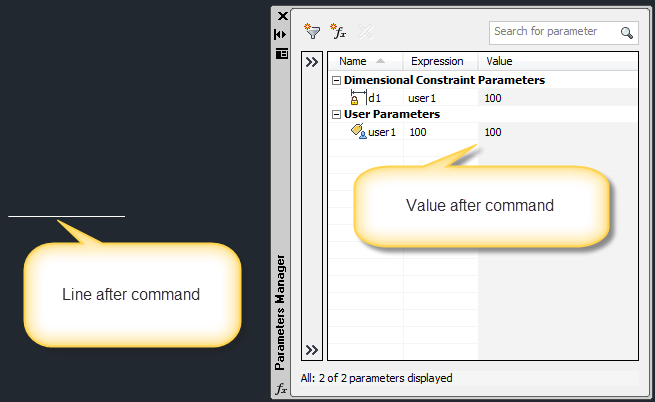
// (C) Copyright 2002-2007 by Autodesk, Inc.
//
// Permission to use, copy, modify, and distribute this software in
// object code form for any purpose and without fee is hereby granted,
// provided that the above copyright notice appears in all copies and
// that both that copyright notice and the limited warranty and
// restricted rights notice below appear in all supporting
// documentation.
//
// AUTODESK PROVIDES THIS PROGRAM "AS IS" AND WITH ALL FAULTS.
// AUTODESK SPECIFICALLY DISCLAIMS ANY IMPLIED WARRANTY OF
// MERCHANTABILITY OR FITNESS FOR A PARTICULAR USE.  AUTODESK, INC.
// DOES NOT WARRANT THAT THE OPERATION OF THE PROGRAM WILL BE
// UNINTERRUPTED OR ERROR FREE.
//
// Use, duplication, or disclosure by the U.S. Government is subject to
// restrictions set forth in FAR 52.227-19 (Commercial Computer
// Software - Restricted Rights) and DFAR 252.227-7013(c)(1)(ii)
// (Rights in Technical Data and Computer Software), as applicable.
//

//-----------------------------------------------------------------------------
//----- acrxEntryPoint.cpp
//-----------------------------------------------------------------------------
#include "StdAfx.h"
#include <AcDbAssocNetwork.h>
#include <AcDbAssocVariable.h>
#include "resource.h"

//-----------------------------------------------------------------------------
#define szRDS _RXST("")

//-----------------------------------------------------------------------------
//----- ObjectARX EntryPoint
class CTestAssocApp : public AcRxArxApp {

public:
	CTestAssocApp () : AcRxArxApp () {}

	virtual AcRx::AppRetCode On_kInitAppMsg (void *pkt) {
		// TODO: Load dependencies here

		// You *must* call On_kInitAppMsg here
		AcRx::AppRetCode retCode =AcRxArxApp::On_kInitAppMsg (pkt) ;

		// TODO: Add your initialization code here

		return (retCode) ;
	}

	virtual AcRx::AppRetCode On_kUnloadAppMsg (void *pkt) {
		// TODO: Add your code here

		// You *must* call On_kUnloadAppMsg here
		AcRx::AppRetCode retCode =AcRxArxApp::On_kUnloadAppMsg (pkt) ;

		// TODO: Unload dependencies here

		return (retCode) ;
	}

	virtual void RegisterServerComponents () {
	}

    static void ListVarsInNetwork(const AcDbAssocNetwork *pNet)
    {
        AcDbObjectIdArray idsActions = pNet->getActions();
        for (int i = 0; i < idsActions.length(); i++) {
            AcDbObjectPointer<AcDbAssocAction> pAction(idsActions[i],AcDb::kForRead);
            if (pAction.openStatus() == Acad::eOk) {
                AcDbAssocNetwork  *pNetSub = AcDbAssocNetwork::cast(pAction.object());
                AcDbAssocVariable *pVar = AcDbAssocVariable::cast(pAction.object());
                if (pNetSub)  {
                   ListVarsInNetwork(pNetSub);
                }  else if (pVar) {
                    acutPrintf(_T("\nVariable Name=%s Value=%s"),
                        pVar->name().kACharPtr(), pVar->expression().kACharPtr());
                }
            }
        }
    }

    static int GetVars(const AcDbAssocNetwork *pNet, AcStringArray &names, AcDbObjectIdArray &ids)
    {
        AcDbObjectIdArray idsActions = pNet->getActions();
        for (int i = 0; i < idsActions.length(); i++) {
            AcDbObjectPointer<AcDbAssocAction> pAction(idsActions[i],AcDb::kForRead);
            if (pAction.openStatus() == Acad::eOk) {
                AcDbAssocVariable *pVar = AcDbAssocVariable::cast(pAction.object());
                if (pVar) {
                    names.append(pVar->name());
                    ids.append(pVar->objectId());
                }
            }
        }
        return ids.length();
    }

    //
    //  Command list all AssocVariable
    //
    static void TestAssocListAssocVars(void)
    {
        AcDbObjectId idNet = AcDbAssocNetwork::getInstanceFromDatabase(acdbCurDwg(),true);
        AcDbObjectPointer<AcDbAssocNetwork> pNet(idNet,AcDb::kForRead);
        if (pNet.openStatus() != Acad::eOk) return;
        ListVarsInNetwork(pNet.object());
    }

    //
    // Command Add new AssocVariable or change existent
    //
    static void TestAssocAddAssocVar(void)
    {
        // Add your code for command TestAssoc.AddAssocVar here
        Acad::ErrorStatus es;
        AcDbDatabase *pCurDb = acdbCurDwg();
        AcDbObjectId idNet = AcDbAssocNetwork::getInstanceFromDatabase(pCurDb,true);
        AcDbObjectPointer<AcDbAssocNetwork> pNetMain(idNet,AcDb::kForRead);
        if (pNetMain.openStatus() != Acad::eOk) return;
        AcDbObjectIdArray ids = pNetMain->getActions();
        AcDbObjectId idNetSub;
        if (ids.length() == 0) {
            AcDbAssocNetwork *pNetSub = new AcDbAssocNetwork();
            if (pNetMain->upgradeOpen() == Acad::eOk) {
                if (pCurDb->addAcDbObject(idNetSub,pNetSub) == Acad::eOk) {
                   pNetSub->addAction(idNetSub,true);
                   pNetSub->close();
                } else {
                   delete pNetSub;
                }
                pNetMain->downgradeOpen();
            }
        } else {
          idNetSub = ids[0];
        }
        ACHAR name[512], val[512];
        if (acedGetString(TRUE,_T("Variable name: "), name) != RTNORM ||
            acedGetString(TRUE,_T("Variable expression: "), val) != RTNORM) {
            return;
        }
        AcDbObjectPointer<AcDbAssocNetwork> pNet(idNetSub,AcDb::kForWrite);
        if (pNet.openStatus() != Acad::eOk) return;
        AcString nameStr = name, valStr = val, errorMsg;
        AcStringArray sVarNames;
        AcDbObjectIdArray idsVars;
        GetVars(pNet.object(), sVarNames, idsVars);
        int ivar = 0;

        if (sVarNames.find(name, ivar)) {
          // Variable exist - change it
            AcDbObjectPointer<AcDbAssocVariable> pVar(idsVars[ivar], AcDb::kForWrite);
            if (pVar.openStatus() == Acad::eOk) {
                if (pVar->validateNameAndExpression(name,val,errorMsg) != Acad::eOk) {
                    acutPrintf(_T("\nError %s"), errorMsg.kACharPtr());
                    return;
                }

                if ((es = pVar->setExpression(valStr,_T(""),true,true,errorMsg,true)) != Acad::eOk) {
                    acutPrintf(_T("\npVar->setExpression(valStr))=%s error=%s"),\
                        acadErrorStatusText(es), errorMsg.kACharPtr());
                    return;
                }
            }
        } else {
            AcDbAssocVariable *ppVar = new AcDbAssocVariable();
            AcDbObjectId idVar;
            if (pCurDb->addAcDbObject(idVar,ppVar) == Acad::eOk) {
                ppVar->close();
                pNet->addAction(idVar,true);
            } else {
                delete ppVar; return;
            }

            AcDbObjectPointer<AcDbAssocVariable> pVar(idVar, AcDb::kForWrite);
            if (pVar.openStatus() == Acad::eOk) {
                if (pVar->validateNameAndExpression(name,val,errorMsg) != Acad::eOk) {
                    acutPrintf(_T("\npVar->validateNameAndExpression(name,val,errorMsg) =  %s"), errorMsg.kACharPtr());
                    pVar->close();
                    pNet->removeAction(idVar,true);
                    return;
                }

                if ((es = pVar->setName(nameStr,true)) != Acad::eOk) {
                    acutPrintf(_T("\npVar->setName(nameStr,true)=%s error=%s"),\
                        acadErrorStatusText(es), errorMsg.kACharPtr());
                    pVar->close();
                    pNet->removeAction(idVar,true);
                    return;
                }

                if ((es = pVar->setExpression(valStr,_T(""),true,true,errorMsg,true)) != Acad::eOk) {
                    acutPrintf(_T("\npVar->setExpression(valStr))=%s error=%s"),\
                        acadErrorStatusText(es), errorMsg.kACharPtr());
                    pVar->close();
                    pNet->removeAction(idVar,true);
                    return;
                }
            }

        }
    }
} ;

//-----------------------------------------------------------------------------
IMPLEMENT_ARX_ENTRYPOINT(CTestAssocApp)

ACED_ARXCOMMAND_ENTRY_AUTO(CTestAssocApp, TestAssoc, ListAssocVars, ListAssocVars, ACRX_CMD_TRANSPARENT, NULL)
ACED_ARXCOMMAND_ENTRY_AUTO(CTestAssocApp, TestAssoc, AddAssocVar, AddAssocVar, ACRX_CMD_TRANSPARENT, NULL)
Also a great sample: http://adndevblog.typepad.com/adnassocconstraintapi.zip
Відповідь корисна? Клікніть на "ВПОДОБАЙКУ" цім повідомленням! | Do you find the posts helpful? "LIKE" these posts!
Находите сообщения полезными? Поставьте "НРАВИТСЯ" этим сообщениям!
На ваше запитання відповіли? Натисніть кнопку "ПРИЙНЯТИ РІШЕННЯ" | Have your question been answered successfully? Click "ACCEPT SOLUTION" button.
На ваш вопрос успешно ответили? Нажмите кнопку "УТВЕРДИТЬ РЕШЕНИЕ"
Alexander Rivilis / Александр Ривилис / Олександр Рівіліс
Programmer & Teacher & Helper / Программист - Учитель - Помощник / Програміст - вчитель - помічник
Facebook | Twitter | LinkedIn






 Thank you very much! It's very kind of you.